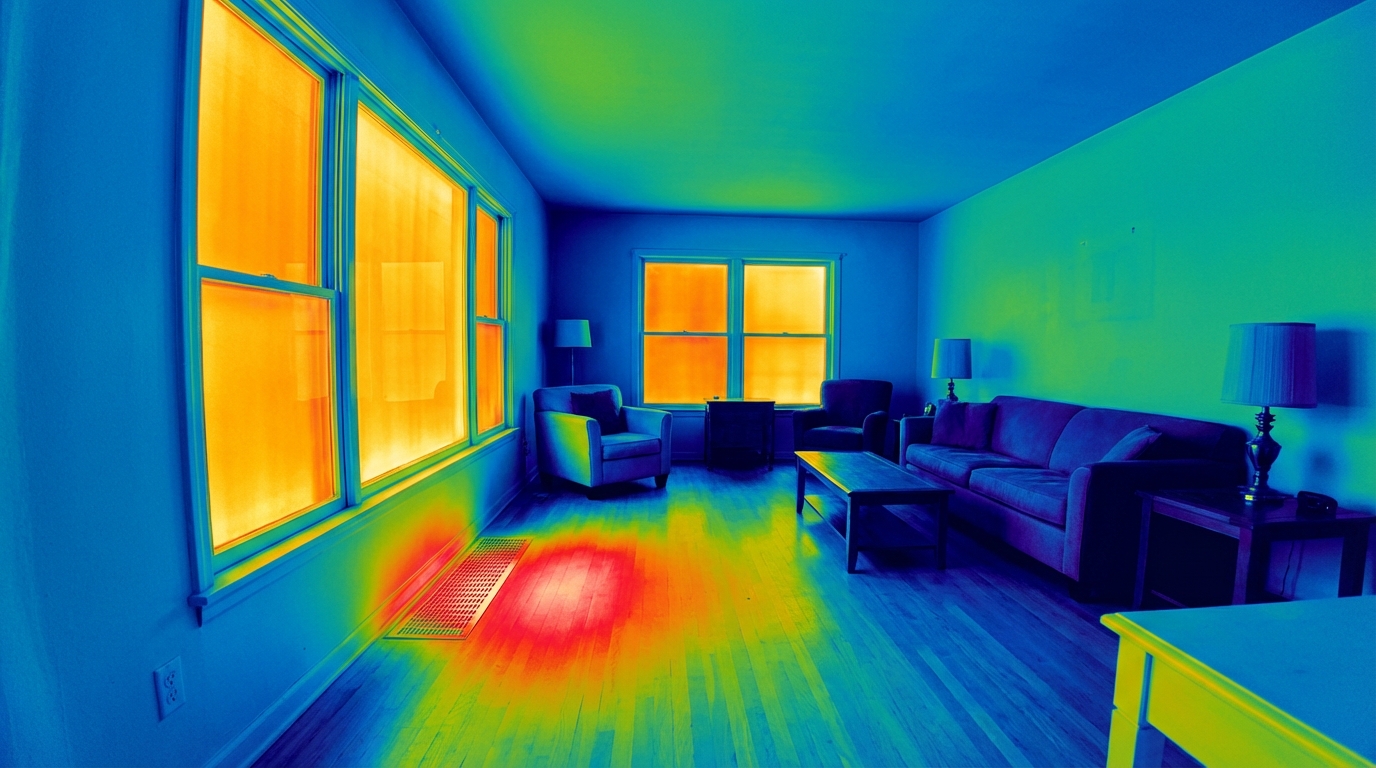
Houston Homebuyer's Infrared Thermal Checklist: Finding Hidden Moisture, Hot Breakers & Pet-Safe Electrical Hazards
Fresh staging paint and new baseboards can hide slow upstairs shower-pan leaks, missing attic insulation, and overheating electrical breakers from the naked eye—until move-in week. Use this room-by-room Houston infrared checklist to protect your investment, your family, and the curious pets exploring every baseboard.
- Evaporative cooling makes active behind-drywall plumbing and roof flashing leaks appear 3°F to 10°F cooler on a 307,200-pixel FLIR T620 scan—even beneath fresh paint.
- Even brand-new Houston construction frequently exhibits pinched HVAC ductwork, uninsulated attic knee-walls, and loose neutral lugs in 200-amp service panels.
- Floor-level hazards—arcing receptacles behind furniture, damp mold-prone baseboards, and unsealed garage/utility penetrations—sit directly at nose-and-paw height for dogs and cats.
- Pairing non-invasive infrared thermography with pinless moisture meters gives homebuyers undeniable photo proof during Texas option-period negotiations.
Why Flashlight-Only Inspections Miss Houston’s Costliest Pre-Purchase Defects
Touring a beautifully renovated bungalow in the Heights, a family two-story in Katy or Sugar Land, or a townhome in Midtown can create a false sense of security. Fresh latex paint, caulked trim, and newly tiled primary showers look immaculate during a thirty-minute open house—yet standard visual home inspections are legally and physically limited to surfaces the inspector can see and touch without cutting into drywall.
In Houston’s 75%+ relative humidity and expansive clay soils, minor settlement cracks in second-floor shower pans, improperly flashed stucco windows, sweat-soaked AC condensate drain pans in 130°F attics, and loose aluminum branch-circuit connections fester silently behind finished walls. By combining forty-plus years of TREC #332 structural expertise with Houston residential infrared inspections, we translate subtle surface temperature differentials into crystal-clear thermal images before your option period closes.
Cold spots on drywall can come from either evaporative moisture OR AC supply air washing a stud bay. That is why Able thermographers always cross-verify every thermal anomaly with calibrated capacitance moisture meters before calling out an active leak.
The Room-by-Room FLIR T620 Thermal Checklist for Houston Homebuyers
During a comprehensive infrared property inspection, we systematically stress-test plumbing, HVAC, and electrical loads—running upstairs showers, cycling heat/cool modes, and energizing kitchen/laundry appliances—so latent defects reveal their thermal signatures in real time. Even buyers purchasing from volume or custom builders rely on Houston new home & 11-month builder warranty inspections because subcontractor rush jobs routinely leave entire ceiling bays uninsulated or exhaust fans venting straight into soffits.
| Home Zone | What FLIR Thermal Imaging Detects | Hidden Risk If Missed at Closing |
|---|---|---|
| Main & Sub Electrical Panels | Overheating breakers, double-lugged neutrals, oxidized bus-bar stabs (>25°F–60°F+ rise) | Arc-fault fire risk, nuisance breaker trips & $2,500–$5,500 panel replacement |
| 2nd-Floor Bathrooms & Kitchen Ceilings Below | Failed shower-pan liners, leaking PEX manifolds, wax-ring seepage above dining ceilings | Subfloor wood rot, toxic Stachybotrys/Aspergillus mold & $8,000–$22,000 bath gut |
| Exterior Stucco, Brick Veneer & Windows | Missing weep-screed drainage, failed window head flashing, wet exterior sheathing | Termite attraction to damp framing & $12,000+ stucco remediation |
| Attic Deck, Knee-Walls & HVAC Plenums | Disconnected flex ducts, uninsulated attic hatches, sweating plenum air leaks | $120–$250/month summer ERCOT electric bill waste & humid indoor bedrooms |
Protecting Curious Noses & Paws: Floor-Level Thermal, Mold & Electrical Checks
More than two-thirds of Houston homebuyers move in with dogs or cats—and pets interact with a house completely differently than adults do. Puppies and curious dogs sleep pressed against exterior baseboards, sniff behind laundry machines and entertainment consoles, chew loose low-voltage landscape or garage door sensor wires, and drink condensation pooling near water heaters or secondary AC drain lines. Defects six inches off the slab that an adult might ignore for months sit right in your pet’s daily breathing and lounging zone.
During our FLIR thermal inspection sweep, scanning wall-to-floor perimeters and low receptacles serves double duty for pet-owning households. Loose back-stabbed 120V outlets running space heaters or dehumidifiers can reach 140°F+ behind a dog crate without tripping a standard breaker, while slow pinhole slab or wall leaks behind laundry-room baseboards foster mycotoxin-producing mold spores that trigger chronic canine coughing, paw licking, and respiratory irritation long before humans smell mildew. As you plan your move-in week and pet-proof your new backyard, garage, and living spaces, pairing your inspection report with practical home-and-pup wellness guides on the PupUpp dog-parent blog helps ensure every corner of the property is safe before the first box is unpacked.
- Test every garage, patio, pool-equipment, and bathroom GFCI receptacle: outdoor water bowls, pet washing stations, and damp patio slabs require instant ground-fault trip protection.
- Check utility closets and detached garages for unsealed exterior gaps or leftover previous-owner rodent bait stations before letting pets roam freely.
- Inspect backyard fence lines, pool gates, and sunken sprinkler valve boxes during the exterior walkthrough so dogs cannot slip out or injure a paw on broken PVC covers.
- Verify dryer-vent termination airflow with thermal imaging: lint-clogged vertical dryer ducts overheat rapidly and pose one of the most common residential fire hazards while pets are home alone.
Turning Side-by-Side Thermal Photos Into Clear Repair Credits Before Closing
Sellers rarely argue with physics. When an inspection report shows a standard photograph of a dry-looking living room ceiling right next to a calibrated FLIR T620 thermogram revealing a 9°F cold moisture plume directly beneath the primary shower—backed by an elevated moisture-meter reading—listing agents and builders take notice immediately. Instead of vague “further evaluation recommended” boilerplate, you gain actionable evidence to request licensed repairs or closing-cost credits while still inside your option window.
Also evaluating commercial investment properties or mixed-use buildings in Houston? Read our commercial flat roof thermal moisture & Section 179 tax guide. Wondering why top Houston buyer’s agents move fast the moment an offer is signed? Check out how 24/7 rapid scheduling protects tight Texas option periods. Ready to book your home inspection with Houston’s trusted infrared team since 1984? Call 713-465-0000 or schedule online via our Houston inspector contact page.
Frequently Asked Questions
Can an infrared camera see mold behind drywall during a Houston home inspection?
+
Infrared cameras do not “see” mold spores directly—they detect the active moisture and evaporative temperature differentials that allow mold to grow behind drywall, tile, and baseboards. Pinpointing hidden moisture early stops both structural rot and indoor mold exposure.
Do brand-new homes in Houston really need an infrared thermal inspection?
+
Absolutely. New homes are built by dozens of rotating subcontractor crews under tight schedules. We routinely uncover missing attic insulation batts, disconnected AC supply ducts, unsealed roof Jacks, shower-valve leaks behind brand-new tile, and loose electrical panel lugs during phase and 11-month warranty inspections.
Which older electrical panels in Houston homes are biggest red flags on a thermal scan?
+
Federal Pacific Electric (FPE Stab-Lok), Zinsco/Sylvania, Challenger, and corroded split-bus or double-lugged panels frequently fail to trip under overload while generating dangerous localized heat signatures inside the enclosure.
Should utilities and AC be turned on before my infrared home inspection?
+
Yes—water, gas, and electricity (with HVAC running) should be active at least 12 to 24 hours prior to the inspection so there is a strong indoor-outdoor temperature differential (ΔT) and live electrical/plumbing load for accurate FLIR thermal diagnostics.
Related Inspection Services
Residential Infrared Inspections
Comprehensive Houston homebuyer inspections with FLIR T620 thermal imaging since 1984.
View Service →New Home & Builder Warranty
Pre-drywall, final walkthrough, and 11-month warranty thermal inspections across Greater Houston.
View Service →FLIR Infrared Imaging
Learn how 307,200-pixel radiometric thermography pinpoints concealed leaks and electrical hotspots.
View Service →More Houston Infrared & Property Guides
Commercial Flat Roof Thermal Moisture Scans in Houston: Pinpointing Leaks vs. Full Section 179 Roof Replacement
Replacing a 40,000-square-foot Houston TPO or modified-bitumen roof based on interior ceiling stains alone often wastes six figures in dry, serviceable insulation. Here is how post-sunset FLIR thermal capacitance imaging maps exact wet-deck boundaries—and how CFOs weigh targeted repairs against IRC Section 179 roof expensing in 2026.
Read Full Guide →Inspection Operations & Speed • 8 min readWhy Real Estate Agents & Facility Managers Book the First Inspector Who Answers: 24/7 Voice AI Scheduling in 2026
When a Houston buyer’s offer is executed at 7:45 PM on a Friday with a five-day Texas option clock ticking, nobody waits until Monday morning for a voicemail callback. Here is why speed-to-answer defines modern inspection firms—and how 24/7 conversational Voice AI keeps senior inspectors focused in the field.
Read Full Guide →Schedule Your FLIR Thermal Property Inspection Today
TREC License #332 • Certified Level II Infrared Thermographers • Residential & Commercial Coverage Across Greater Houston.